BlogTopic
Testing sign-in, sign-up and codes
Sign-up and sign-in journeys that leave the screen: codes by email and SMS, confirmation links, Face ID.
GuidesWebSign-up email links to localhost? Catch it before your users doA confirmation or reset email that points at localhost or an old preview is a common bug in AI-built apps. A test that opens the real email finds it on the first run.3 min read GuidesWebTest that one user cannot see another user's dataApps built with AI often show one account's records to another. A two-person test signs in as each, in separate browsers, and checks what each one can see.2 min read
 GuidesWebTest password reset from the email to the new passwordA reset email that links to the wrong host, or a link that fails in a new browser, locks users out. One test requests the reset, follows the link and signs in again.2 min read
 GuidesWebTest team invitations from the email to the joined workspaceInvitations cross two people, two sessions and an email. One plain-language test invites a second address, accepts from the email and checks both sides see the same team.2 min read
 GuidesWebTest admin and member roles: what each person can see and doPermission bugs show a member a button they should not have, or hide one an admin needs. Test each role with its own stored account and check the screen for both.1 min read
 GuidesiPhone and iPadPass App Store review: test what the reviewer will do firstApple says over 40% of unresolved review issues fall under guideline 2.1. Test the reviewer's path: install, sign in with the demo account, reach the content.2 min read
 GuidesiPhone and iPadAndroidSign in to a mobile app in a test without the password in the testMost app tests start behind a sign-in. Store the account once; the tester types the password into the app itself and the AI never sees it, on iPhone and Android.2 min read
 GuidesWebSign-up emails that stop arriving after launchSupabase's built-in mailer sends 2 emails an hour, only to your own team. Sign-up works for you and fails for everyone else. A test with its own mailbox catches it.2 min read
 GuidesWebUploads that work for you and fail for your usersA photo upload works when you try it and fails for a normal user with a 403 from storage rules. Test it as a normal account, with a real file, and check after a reload.2 min read
 GuidesWebTest your app as a brand-new user, not as yourselfYour account has data, a team and every flag on. A new user's has nothing. Sign up fresh on every run and check the first thing a new user must be able to create.2 min read
 GuidesWebTest both sides of a feature flag before you flip itA flag doubles the app you ship: on and off. Bugs hide in the side nobody tested. Two stored accounts, one in the rollout and one out, run the same journey each.2 min read
 GuidesWebTest a membership site: members in, everyone else outCaching can show members' content to the public, or lock members out. One test signs in as a member and checks a visitor in a separate browser sees only the teaser.2 min read
 GuidesiPhone and iPadWhat survives when a user deletes and reinstalls your appOn iPhone, deleting an app clears its files but not its keychain, so a reinstall can come back signed in. A real run shows the note wiped and the token still there.3 min read
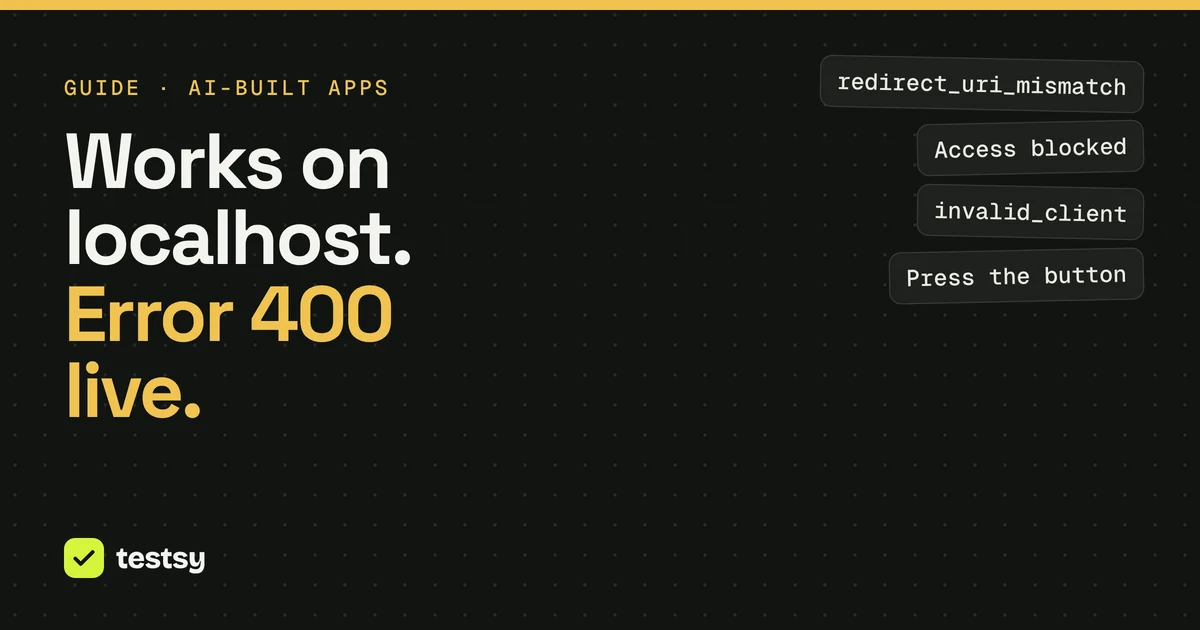
 GuidesWebSign in with Google works locally and fails in production“Error 400: redirect_uri_mismatch” is what new users see when the Google sign-in was only set up for localhost. A test presses the button and checks where it lands.2 min read
 GuidesWebTest that sign-in and saved data survive a reloadThe page looked right until someone pressed refresh. One plain-language test signs in, reloads, saves a note, reloads again and checks what is left.3 min read
 GuidesWebTest email verification codes, the wrong code and the resend tooA sign-up test that stops at "we sent you a code" proves little. Two real runs read the email, try a wrong code, ask for a new one and finish signing up.5 min read
 GuidesWebTest an admin site and a public site, as two people, in one testWhat an editor publishes, a visitor must see, and a draft must stay hidden. Two real runs cross from an admin site to a public one, in two separate browsers.5 min read
 GuidesAndroidTest SMS code sign-in on Android without a second phoneA text message arrives, Android offers the code, the app verifies it. One plain-language test covers the whole hand-off, with the message and the result on video.3 min read
 GuidesiPhone and iPadTest Face ID unlock: the wrong face, then the right oneThe locked path matters as much as the unlocked one. A plain-language test answers the Face ID prompt with the wrong face, then the right one, and checks both.2 min read
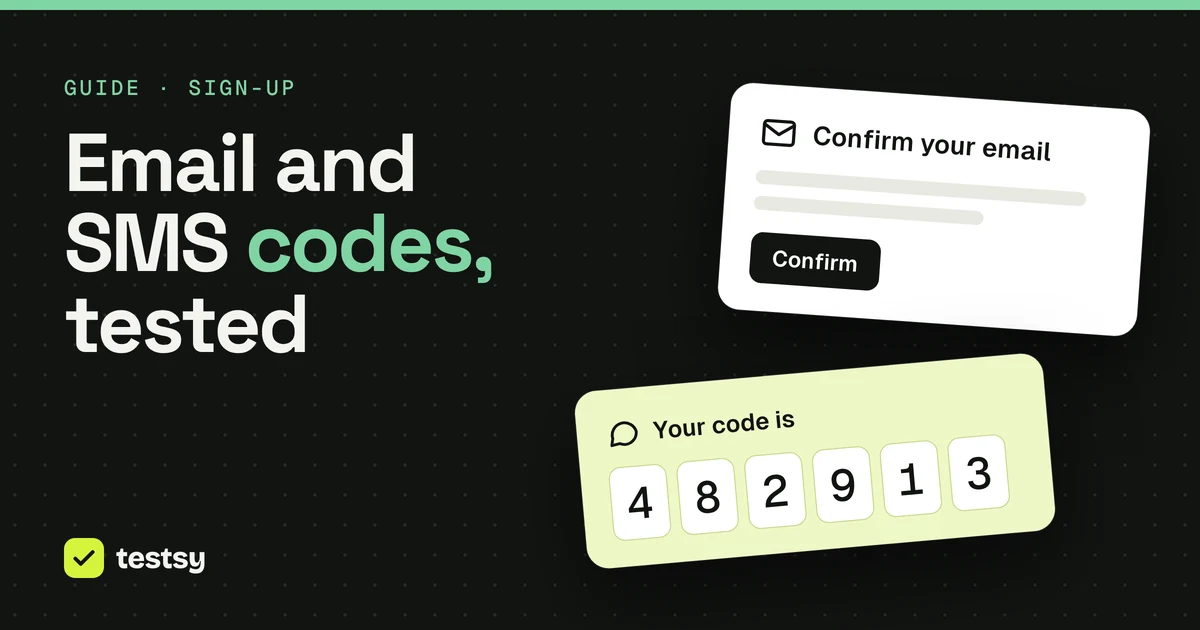
 GuidesWebTest sign-ups that send an email or SMS codeA sign-up form that submits is not a sign-up that works. Give the test its own mailbox or phone number and check the whole journey, code included.4 min read
GuidesWebTest that one user cannot see another user's dataApps built with AI often show one account's records to another. A two-person test signs in as each, in separate browsers, and checks what each one can see.2 min read
GuidesWebTest password reset from the email to the new passwordA reset email that links to the wrong host, or a link that fails in a new browser, locks users out. One test requests the reset, follows the link and signs in again.2 min read
GuidesWebTest team invitations from the email to the joined workspaceInvitations cross two people, two sessions and an email. One plain-language test invites a second address, accepts from the email and checks both sides see the same team.2 min read
GuidesWebTest admin and member roles: what each person can see and doPermission bugs show a member a button they should not have, or hide one an admin needs. Test each role with its own stored account and check the screen for both.1 min read
GuidesiPhone and iPadPass App Store review: test what the reviewer will do firstApple says over 40% of unresolved review issues fall under guideline 2.1. Test the reviewer's path: install, sign in with the demo account, reach the content.2 min read
GuidesiPhone and iPadAndroidSign in to a mobile app in a test without the password in the testMost app tests start behind a sign-in. Store the account once; the tester types the password into the app itself and the AI never sees it, on iPhone and Android.2 min read
GuidesWebSign-up emails that stop arriving after launchSupabase's built-in mailer sends 2 emails an hour, only to your own team. Sign-up works for you and fails for everyone else. A test with its own mailbox catches it.2 min read
GuidesWebUploads that work for you and fail for your usersA photo upload works when you try it and fails for a normal user with a 403 from storage rules. Test it as a normal account, with a real file, and check after a reload.2 min read
GuidesWebTest your app as a brand-new user, not as yourselfYour account has data, a team and every flag on. A new user's has nothing. Sign up fresh on every run and check the first thing a new user must be able to create.2 min read
GuidesWebTest both sides of a feature flag before you flip itA flag doubles the app you ship: on and off. Bugs hide in the side nobody tested. Two stored accounts, one in the rollout and one out, run the same journey each.2 min read
GuidesWebTest a membership site: members in, everyone else outCaching can show members' content to the public, or lock members out. One test signs in as a member and checks a visitor in a separate browser sees only the teaser.2 min read
GuidesiPhone and iPadWhat survives when a user deletes and reinstalls your appOn iPhone, deleting an app clears its files but not its keychain, so a reinstall can come back signed in. A real run shows the note wiped and the token still there.3 min read
GuidesWebSign in with Google works locally and fails in production“Error 400: redirect_uri_mismatch” is what new users see when the Google sign-in was only set up for localhost. A test presses the button and checks where it lands.2 min read
GuidesWebTest that sign-in and saved data survive a reloadThe page looked right until someone pressed refresh. One plain-language test signs in, reloads, saves a note, reloads again and checks what is left.3 min read
GuidesWebTest email verification codes, the wrong code and the resend tooA sign-up test that stops at "we sent you a code" proves little. Two real runs read the email, try a wrong code, ask for a new one and finish signing up.5 min read
GuidesWebTest an admin site and a public site, as two people, in one testWhat an editor publishes, a visitor must see, and a draft must stay hidden. Two real runs cross from an admin site to a public one, in two separate browsers.5 min read
GuidesAndroidTest SMS code sign-in on Android without a second phoneA text message arrives, Android offers the code, the app verifies it. One plain-language test covers the whole hand-off, with the message and the result on video.3 min read
GuidesiPhone and iPadTest Face ID unlock: the wrong face, then the right oneThe locked path matters as much as the unlocked one. A plain-language test answers the Face ID prompt with the wrong face, then the right one, and checks both.2 min read
GuidesWebTest sign-ups that send an email or SMS codeA sign-up form that submits is not a sign-up that works. Give the test its own mailbox or phone number and check the whole journey, code included.4 min read